
Hyderabad is not just growing, it’s evolving. With its population expected to double by 2050, city planners are no longer thinking in years, but decades. In Telangana, the Hyderabad Metropolitan Development Authority (HMDA) is expanding its jurisdiction from 7,257 sq. km to a massive 10,472 sq. km, stretching beyond the Outer Ring Road (ORR) and edging toward the Regional Ring Road (RRR). This isn’t just a bureaucratic change, it’s a reflection of how the city is outgrowing its old identity and embracing a smarter, more connected future. With an expanded metro rail plan, enhanced road networks, and a commitment to sustainability.
Hyderabad is laying the groundwork for a metropolitan experience that works for everyone, not just today’s citizens, but tomorrow’s too.
Comprehensive Mobility Plan: Laying the Groundwork for 2050
Hyderabad’s transformation begins with a bold, data-driven Comprehensive Mobility Plan (CMP). The plan isn’t just a report, it’s a vision that accounts for projected population surges, land use, and evolving transport behaviors. CMP aims to create a future-proof transportation network that balances growth and accessibility.
- It goes beyond infrastructure factoring in environment, sustainability, and inclusive access.
- Based on future travel demand, especially public transport uptake, to avoid under- or over-building.
- Incorporates emerging tech like mobility-as-a-service (MaaS), electric vehicles, and smart signaling.
- Three sub-reports are already drafted, including one on projected public transport demand.
- The full CMP report is scheduled for release by August 2025.
- Consultations are ongoing with urban planners, civil engineers, and citizen groups to keep the plan people-focused.
This forward-looking strategy shows Hyderabad isn’t just reacting to growth, it’s anticipating it.
Public Transport: The Beating Heart of Hyderabad’s Commute
Public transport isn’t a backup plan, it’s the main engine of Hyderabad’s urban pulse. As of now, the city moves millions daily through TGSRTC buses and a modest metro system. But projections show that this setup will fall short by 2050 if major changes aren’t made.
Daily ridership today:
- 10–15 lakh commuters depend on TGSRTC buses.
- 4–5 lakh commuters ride the Metro Rail across 69 km.
Why change is urgent:
- The metro coverage is barely scratching the surface of what’s needed.
- Most bus routes suffer from traffic congestion, making commute times unreliable.
- Future demand will be shaped by rising affordability, population doubling, and increased suburban migration.
The Response:
- Upgrade metro to become the primary transit option.
- Revise RTC routes to feed into major metro stations for seamless multimodal travel.
- Explore electric and green bus fleets to cut down on urban emissions.
By 2050, the goal is not just efficient movement, but clean, reliable, and affordable transport for every citizen.
Satellite Towns and the Rise of Micro-Cities Around Hyderabad:
As Hyderabad expands its boundaries, the growth isn’t just outward it’s strategic. The future vision includes developing satellite towns and micro-cities around the core metropolitan region. Areas like Shadnagar, Medchal, Yadadri, and Sangareddy are already being eyed for structured urban expansion. These regions will not only accommodate the rising population but also ease pressure on the city’s main infrastructure. Instead of allowing unregulated urban sprawl, authorities are crafting specific development blueprints for these zones incorporating planned residential layouts, commercial districts, green zones, and essential services.
These micro-cities are intended to become self-sustaining clusters with job hubs, schools, and healthcare centers, reducing the need for daily long-distance commutes. The Regional Ring Road (RRR) is expected to serve as the backbone for this decentralization, offering seamless connectivity to Hyderabad’s economic heart while fostering balanced urbanization. In the long run, these satellite towns will serve as buffers, preventing over-congestion and enabling smoother growth across the entire HMDA region.
Metro Expansion: From a Modest Network to a Citywide Lifeline
The metro is no longer just a high-end transit alternative, it’s Hyderabad’s path to sustainable commuting. The current 69-km network feels like a skeleton when compared to the sprawling demands of a growing megacity. Planners have laid out an ambitious roadmap to make metro travel a way of life for crores of people.

Phased Expansion Details:
- Phase II: 74 km covering high-demand corridors.
- Phase IIB: 86 km stretching into underserved zones.
- Ultimate Vision by 2050: 629 km of metro rail network crisscrossing the entire Hyderabad metropolitan region.
Key Corridors Targeted:
- Airport routes
- Suburban expansion zones
- Commercial business hubs like Gachibowli and Financial District
- Connectivity to RRR and future industrial clusters
This isn’t just about track length, it’s about access. With smart station designs, feeder bus integration, and digital ticketing, Hyderabad’s metro aims to rival the best systems in Asia.
Roads, Flyovers & Junctions: Connecting the Unconnected
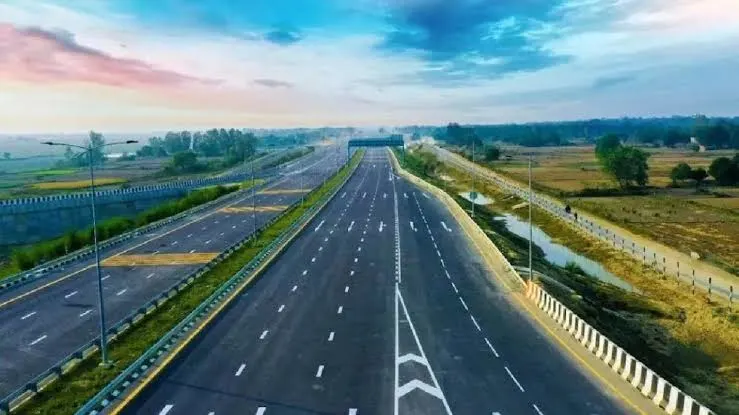
While public transport takes center stage, roads remain essential veins of urban life. Hyderabad’s Comprehensive Mobility Plan isn’t neglecting them, in fact, it’s reinventing them. The city is preparing for a layered road network that’s as strategic as it is expansive.
Key Projects and Upgrades:
- Construction of new flyovers and interchanges at critical bottlenecks.
- Widening existing arterial roads to meet future vehicle volumes.
- Special DPRs (Detailed Project Reports) for high-priority junctions already underway.
- Linking roads to metro stations for smooth last-mile connectivity.
- With growth spreading toward the RRR, remote zones need road infrastructure now, not after they’re overpopulated.
- Heavy commercial traffic will be rerouted to outer belts, easing urban congestion.
- Better roads directly impact ambulance response times, goods delivery efficiency, and daily quality of life.
The future isn’t just about moving people, it’s about doing it intelligently, safely, and inclusively.
Hyderabad’s 2050 Vision: Planning for People, Not Just Projects
It’s easy to see urban planning as a bureaucratic checklist. But Hyderabad’s 2050 vision is rooted in one thing: people. The HMDA’s master plan isn’t just about adding more, more roads, more rails, more towers but about doing better.
Human-Centric Urban Growth Includes:
- A metro that feels as natural as using a smartphone.
- Roads designed for cars, cycles, and wheelchairs alike.
- Neighborhoods connected by green corridors and community spaces.
- Cities within the city well-planned suburban hubs with their own economic lifelines.
- Affordable housing near metro corridors
- Eco-sensitive zoning and tree cover preservation
- Smart waste and water management systems
- Mixed-use development that reduces commute necessity
By 2050, Hyderabad isn’t aiming to be the biggest, it’s aiming to be the most livable.
Digital Infrastructure and Smart City Integration:
Urban growth without digital infrastructure is like building a house without electricity. Recognizing this, Hyderabad’s 2050 blueprint heavily integrates digital infrastructure into its planning. The city’s transformation isn’t limited to concrete and asphalt, it extends into cloud computing, IoT networks, AI-enabled surveillance, and real-time traffic monitoring. Initiatives under the Smart City program are being scaled to cover more areas, with plans to incorporate smart grids, automated waste systems, public Wi-Fi zones, and digital civic platforms citywide.
This focus ensures that governance becomes more transparent and accessible while also allowing residents to engage more directly with city services. For instance, smart parking systems and dynamic traffic signals can drastically improve commute efficiency, while predictive analytics can help authorities manage utilities better. As the population doubles and the city becomes more complex, Hyderabad’s embrace of smart technologies will play a central role in maintaining livability, efficiency, and resilience in an increasingly urban future.
Conclusion:
Hyderabad is more than halfway into a transformation that will redefine it for generations. With the HMDA expanding its reach, and the CMP laying out a future-ready transportation framework, the city is clearly investing in more than infrastructure, it’s investing in quality of life. Metro expansions, smarter roads, and a vision that integrates sustainability, equity, and technology are setting Hyderabad apart. It’s not about catching up with other global cities, it’s about building something uniquely better.
FAQs:
The CMP is a master strategy to design Hyderabad’s transportation and urban mobility systems until 2050. It includes plans for metro expansion, road development, and sustainable transit systems.
The metro network is set to grow from 69 km to 629 km by 2050, with several phases of expansion covering underserved and high-demand corridors.
Yes. The HMDA is expanding its jurisdiction to 10,472 sq. km, including areas near the Regional Ring Road (RRR), reflecting the city’s outward growth.
Multiple flyovers, widened roads, improved junctions, and integration of public transport modes are being planned to reduce congestion and improve last-mile connectivity.
Sustainability is a core focus. From EV-friendly transport to green zoning laws, the city is integrating eco-conscious planning at every level of its growth strategy.