
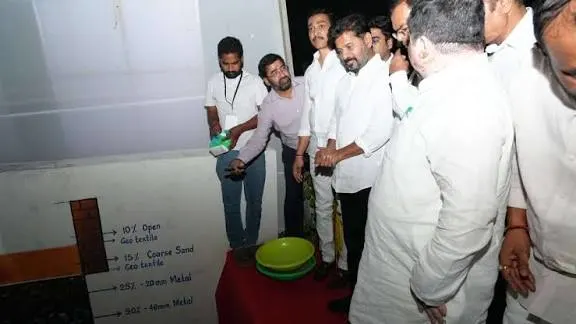
Hyderabad is witnessing a major step forward in its urban infrastructure with the inauguration of six new Sewage Treatment Plants (STPs) by Chief Minister A Revanth Reddy at Amberpet. Alongside this, he also laid the foundation stone for 39 additional STPs around the Outer Ring Road (ORR). These projects are part of the state’s wider vision to achieve 100 percent sewage treatment, a move that promises cleaner rivers, healthier neighborhoods, and a sustainable future for the city’s fast-growing population.
Growing Importance of Sewage Management in Hyderabad:
Urban expansion in Hyderabad has brought enormous pressure on its sewerage network. With over 10,700 kilometers of pipelines and more than six lakh manholes, the city already manages close to 1950 million liters of sewage daily. Yet, older treatment plants could not match the rising demand. This is why the government prioritized building new facilities to ensure that untreated wastewater no longer flows into rivers or lakes.
- Existing treatment plants in 2008–09 had a combined capacity of 772 MLD.
- Rapid growth meant demand soon outpaced supply, creating a pressing need for expansion.
- Untreated sewage directly harmed the Musi River and city lakes, causing environmental and health concerns.
By taking action now, the government is addressing both present challenges and preparing for future needs.
Six New Plants at Amberpet Bring Immediate Relief:
The newly inaugurated plants in Amberpet represent a landmark in Hyderabad’s sewage treatment capacity. Among them is a major facility designed to handle large volumes of wastewater efficiently. This comes as a boost for areas under the Greater Hyderabad Municipal Corporation (GHMC), where the gap between sewage generated and treated has been steadily narrowing.
- The Amberpet units will directly add significant capacity to the city’s network.
- They support neighborhoods that were previously overburdened by untreated sewage outflow.
- Their location near the Musi River ensures reduced pollution levels, safeguarding the ecosystem.
- Local communities stand to benefit through improved hygiene and cleaner surroundings.
These six plants, though only a part of the larger initiative, highlight the state’s commitment to improving public health and protecting Hyderabad’s waterways
Foundation for 39 New Plants Across ORR:
The Chief Minister’s vision extends beyond the city center. By laying the foundation for 39 new STPs in the fast-developing ORR municipalities, the government is preparing for the future. These plants, with a planned capacity of 972 MLD, are being developed under the AMRUT 2.0 scheme at an estimated cost of over Rs 3,800 crore.
The ORR region is among the fastest-growing areas of Hyderabad, with new residential hubs, commercial zones, and industrial parks emerging rapidly. Without timely planning, untreated sewage could become a major civic challenge. These projects ensure that the region will have a robust system in place by 2026.
- Construction under AMRUT 2.0 guarantees funding and faster implementation.
- 972 MLD capacity is sufficient to meet sewage projections for the next decade.
- By 2036, Hyderabad’s combined sewage treatment capacity is expected to reach nearly 2850 MLD, securing the city’s long-term needs.
The foundation laid today is not just about infrastructure but about creating a healthier urban environment for generations.
Economic Impact of Sewage Treatment Investments:
Large-scale projects like the six new plants in Amberpet and the upcoming 39 units across the ORR are not only about environmental improvement but also about creating strong economic value. With an investment of over Rs 3800 crore under the AMRUT 2.0 scheme, the state is channeling funds into infrastructure that will generate both short-term and long-term returns. In the short term, these projects create jobs in construction, engineering, and project management. Thousands of workers are employed in the building phase, which directly supports local families and boosts related industries such as cement, steel, and machinery.
In the long run, efficient sewage management reduces healthcare costs by curbing the spread of waterborne diseases, saves expenses on lake rejuvenation, and enhances land values near clean water bodies. When neighborhoods enjoy better sanitation and cleaner surroundings, businesses are more likely to set up offices and industries, contributing to Hyderabad’s economic vibrancy. These projects also make the city attractive to global investors who look for sustainable urban planning in modern metros. In this way, sewage treatment infrastructure becomes a foundation for both healthier citizens and stronger economic growth.
Progress in Expanding STPs Across GHMC:
The Greater Hyderabad Municipal Corporation (GHMC) has seen a steady expansion of its sewage treatment facilities over the past few years. Between 2022 and 2025 alone, the government initiated construction of 20 new plants with a total capacity of more than 1100 MLD. Out of these, two smaller facilities were completed in November 2023, while fifteen larger units with a combined capacity of over 970 MLD became operational after December 2023.
This progress has pushed Hyderabad’s total STP count to 42, with an impressive treatment capacity of around 1765 MLD. By October 2025, three more plants with a combined 113 MLD capacity will be completed, taking the total to 45 facilities. At that point, the city will finally reach the milestone of meeting 100 percent of sewage treatment requirements within GHMC limits.
- GHMC sewage generation: approximately 1950 MLD.
- Current capacity with new plants: 1765 MLD.
- By October 2025: capacity will rise to 1878 MLD.
- Goal: full sewage treatment coverage within GHMC limits.
This timeline shows that Hyderabad is very close to achieving something many metropolitan cities still struggle with.
Musi River Protection and Restoration Efforts:
The Musi River has long been a concern for Hyderabad, with untreated sewage often flowing directly into its waters. Protecting this river has become central to the Telangana government’s environmental agenda. To achieve this, a detailed plan has been prepared, including laying trunk lines at a cost of nearly Rs 4700 crore. These will channel sewage directly into treatment plants before it reaches the river.
- Amberpet, Nagole, Nallacheruvu, and Attapur continue to be key treatment hubs.
- Planned additions of 234 MLD will raise capacity to nearly 1550 MLD by 2027.
- This will drastically cut down untreated sewage discharge into the Musi.
- Cleaner river water will directly benefit agriculture, ecology, and public health.
Earlier, under the National River Conservation Directorate (NRCD) Phase I between 2008 and 2009, about 592 MLD capacity was created at Amberpet, Nagole, Nallacheruvu, and Attapur. In the latest phase (2024–25), additional plants along the Musi are being built with a capacity of 723 MLD. Together, they bring the current capacity along the Musi corridor to 1315 MLD.
These initiatives underline the government’s dual commitment: modernizing infrastructure while protecting natural ecosystems.
Long-Term Vision for 100 Percent Sewage Treatment:
The ultimate aim of these projects is to guarantee 100 percent sewage treatment coverage not just within GHMC, but also in the ORR municipalities. By 2026, the city and its extended urban areas are expected to have an overall treatment capacity of nearly 2850 MLD. This is significant because sewage projections for 2036 stand at around 2800 MLD, which means Hyderabad will be future-ready for at least a decade.
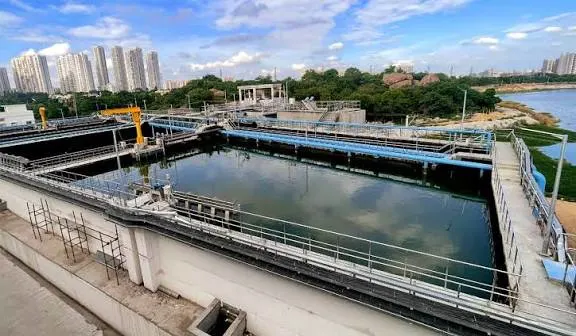
Such forward planning ensures that the city will not fall back into the cycle of untreated sewage and polluted lakes. More importantly, it creates the groundwork for sustainable growth in residential, commercial, and industrial zones. The benefits are not limited to cleaner water, but also include:
- Reduced waterborne diseases due to improved sanitation.
- Revival of lakes and rivers through reduced pollution levels.
- Creation of new green belts and healthier ecosystems.
- A better quality of life for residents across the metropolitan area.
By aligning infrastructure growth with population expansion, the government is ensuring Hyderabad remains one of the leading cities in sustainable urban management.
Community Benefits and Environmental Sustainability:
The true measure of the STP expansion lies in the way it improves everyday life for residents. By ensuring that untreated sewage is not allowed into the Musi River or city lakes, the government is directly protecting local ecosystems and public health. Cleaner water supports agriculture on the city’s outskirts, where farmers rely on river water for irrigation. Reduced pollution means lower risks of diseases such as cholera and dysentery, giving families more security in their daily lives. Moreover, by treating sewage before it reaches natural water bodies, the state is preserving biodiversity, preventing fish kills, and allowing aquatic ecosystems to recover.
These steps also align with the global push for sustainable urban development, showing that Hyderabad is not just growing in size but also in responsibility. For communities living near rivers and lakes, these projects bring immediate relief from foul smells, mosquito breeding, and dirty surroundings. Over time, they will also enjoy cleaner recreational spaces and restored lakesides. The connection between infrastructure and community well-being becomes clear here, as residents witness the direct benefits of the government’s investments in their everyday environment.
Conclusion:
The inauguration of six new sewage treatment plants at Amberpet and the foundation for 39 more across the Outer Ring Road marks a transformative step in Hyderabad’s urban development journey. Under the leadership of Chief Minister A Revanth Reddy, the city is moving towards a future where every drop of sewage is treated before it touches rivers or lakes. With major investments in GHMC areas, trunk line projects for the Musi River, and large-scale facilities under the AMRUT 2.0 scheme, Hyderabad is preparing for both its current needs and the demands of the next decade. This vision not only addresses infrastructure challenges but also secures cleaner water, healthier neighborhoods, and a stronger foundation for sustainable growth.
FAQs:
New STPs are crucial because the city generates close to 1950 MLD of sewage daily, and older facilities could not meet the demand. The new plants ensure 100 percent treatment capacity, preventing untreated sewage from polluting rivers and lakes.
As of September 2025, there are 42 STPs with a total capacity of about 1765 MLD. By October 2025, three more will be added, bringing the total to 45 plants with 1878 MLD capacity.
The Musi River has historically carried untreated sewage from the city. Dedicated projects along its banks, supported by trunk lines and additional plants, aim to treat sewage before discharge, reducing river pollution and improving water quality.
The 39 new STPs planned for the ORR municipalities are scheduled for completion by 2026. Once operational, they will add 972 MLD capacity to Hyderabad’s overall sewage treatment system.
Residents will see cleaner neighborhoods, fewer health issues related to contaminated water, revival of lakes and rivers, and an overall improvement in quality of life. The projects also ensure the city’s sewage management remains future-proof until at least 2036.